
Guide for pet groomers
Dog grooming client records: what to keep on every pet
What to record for every dog you groom: owner and vet details, breed, coat, temperament, vaccines with expiry dates, and what you did last visit.
Updated 6 min readWritten by the ServiceSprig team, reviewed by Trevor, founder. How we write these
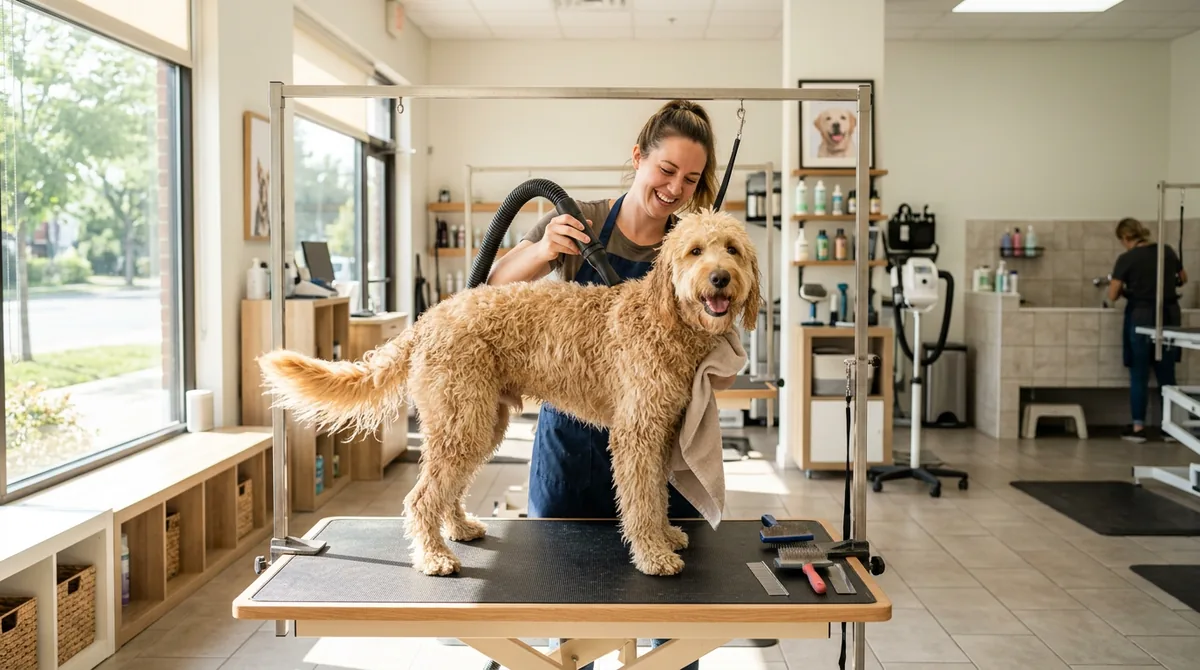
A good grooming record lets anyone on your team pick up a dog they've never met and do the same groom, safely. It tells you the dog bites when its feet are touched, the owner wants the ears left long, and the rabies certificate runs out next month.
If your records live on index cards or in your head, that works until the day you're off sick, or a new groomer starts. This guide covers what to record, why, and how to keep it up to date without slowing down check-in.
Start with the owner
The owner's record is short, but it has to be right.
- Name, mobile number and email. The phone number is the one you'll call when the dog is ready, or when something goes wrong on the table.
- A second contact for when the owner can't be reached.
- Their vet's name and phone number. If a dog has a reaction or an injury, you won't want to be searching for it.
- Pick-up arrangements. Who's allowed to collect the dog, and whether they want a call or a text when it's ready.
Then the dog itself
Keep one profile per pet. When a household has more than one dog, each one needs its own notes.
- Name, species and breed. Write "doodle" or "mixed" if that's all the owner knows.
- Size and weight. Weight affects table time, product amounts and, if you price by size, the price.
- Coat. Double coat, curly, wire, matted on arrival. This decides the tools and the time slot as much as breed does.
- Age. Puppies and seniors may need shorter sessions and more breaks.
Temperament and handling notes
This is the part of the record that keeps people safe, and the part most often left blank.
Use short, consistent labels so everyone reads them the same way: nervous, nips when stressed, hates the dryer, good with clippers, senior, puppy. Then add a sentence of detail:
- "Muzzle for nails, fine for everything else."
- "Hand-dry only. Panics at the high-velocity dryer."
- "Stands better on the floor than the table for feet."
Update the notes after every groom, while it's fresh. A note written at pick-up is worth more than a perfect one you never get round to.
Vaccines: what to ask for and how to track expiry
Grooming brings dogs close together, so most shops ask for proof of vaccination. What you require is your decision, and some of it may be set by local law.
A few points to work from:
- The core list. The American Animal Hospital Association's canine vaccination guidelines treat distemper, adenovirus, parvovirus, leptospirosis and rabies as core vaccines for dogs (AAHA, checked 4 Nov 2026).
- Rabies follows the law. AAHA's guidance says rabies timing follows state and local law, so check the rules where you work.
- Bordetella (kennel cough). AAHA lists it as non-core: recommended for some dogs based on lifestyle and risk of exposure. A grooming shop is a place dogs share, so decide whether your policy asks for it.
- Ask for the record, not a promise. A photo of the vet's certificate with the dates on it is easy to collect and easy to check.
For each vaccine, record the name and the expiry date. Then check the dates when the appointment is booked, well before the dog arrives. Turning a dog away on the morning of a groom is hard on everyone.
Not sure what your local rules require? Ask your state veterinarian's office or local animal control. This guide isn't legal or veterinary advice.
Keep a short visit history
What you did last time is the best guide to this time.
- The service and the add-ons.
- Blade lengths and guard combs: "#7 body, #4 on the legs, teddy face."
- Products, especially for sensitive skin.
- Anything you found: a lump, a hot spot, matting behind the ears. Tell the owner, and write down that you did.
Owners notice when the groom is the same every time. Notes are how you make that happen when a different groomer is on.
How this works in ServiceSprig
If you're a groomer using ServiceSprig for pet groomers, turn on pet profiles in Settings, under Client profiles, by choosing Pets.
- Each client can have several pets, each with a name, species, breed, size, weight in pounds, coat, vet, temperament tags and handling notes. The tags match the list above: Nervous, Nips when stressed, Hates the dryer, Good with clippers, Senior, Puppy.
- Vaccines are recorded per pet, each with an optional expiry date and an optional photo of the record card. Photos are kept private to your business.
- The appointment card shows a vaccine badge worked out from the dates you entered, such as "Rabies expired Oct 3", "Rabies expires before this visit (Nov 20)" or "Vaccines up to date". It's there to help you spot problems early. It doesn't stop a booking, and ServiceSprig doesn't check the records themselves.
- When clients book online, they're asked for their pet's name and, optionally, the breed. A returning client's pet is matched by name. A new name is added as a new pet, flagged for you to review.
- Each appointment is for one pet. Two dogs from one home are two appointments, which keeps each dog's history clean.
- Staff see what they need. Groomers see the pets on their own appointments, with the vaccines and handling notes, and the last five visits for that pet.
To collect vaccine certificates before the first visit, add a photo question to your intake form. Clients can take a photo or pick one from their phone's gallery, and you copy the dates into the pet's profile.
Detailers can switch the same setting to Vehicles to keep make, model, year, size and colour per car instead. See our guide to booking and reminders for mobile detailers.
Make rebooking part of the record
The dogs that look best are the ones that come back on schedule. Once you know a dog's coat, you know how often it needs you.
- Book a regular schedule. With recurring appointments on the Solo and Shop plans, you book a dog into the same slot every 1 to 8 weeks, for up to 26 visits or 12 months, and see any clashes before you save. Each visit can be for the same pet.
- Price the extras. De-shedding, a nail grind or teeth brushing can be service add-ons that add their own price and time when the owner books.
- Send reminders. Email reminders go out before each visit, on every plan. Rebook nudges (Solo and Shop), once you switch them on, can follow up when a dog is due, for owners who've agreed to marketing emails. See reminders and automations.
A simple new-client checklist
- Owner name, mobile, email and a second contact.
- Vet name and phone.
- One profile per pet: name, breed, size, weight, coat, age.
- Temperament tags and a line of handling notes.
- Vaccine names and expiry dates, with a photo of the certificate.
- After the groom: blades, products, findings, and the date of the next visit.
FAQ
Do I have to see a dog's vaccine records before grooming? It depends on your local rules and your shop policy. A sensible starting point is the core vaccines AAHA lists, with rabies set by local law, and a decision on Bordetella. Check with your state veterinarian or local animal control.
Does ServiceSprig remind me when a vaccine expires? It shows a badge on the appointment card when a vaccine has expired, will expire before the visit, or has no expiry date entered. It doesn't send expiry reminders to you or the owner.
Can clients send vaccine records when they book? Yes, through a photo question on your intake form. Clients can upload from their phone's camera or gallery.
Can one client have more than one dog? Yes. Each pet has its own profile, and each appointment is for one pet.
Can I use ServiceSprig today? ServiceSprig is in early access. Join the list and Trevor will be in touch as spots open.